GEOTECHNICAL ENGINEERING
HOUSTON

Geotechnical Engineering in Houston

Evidence-based design. Reliable delivery.

LEARN MORE

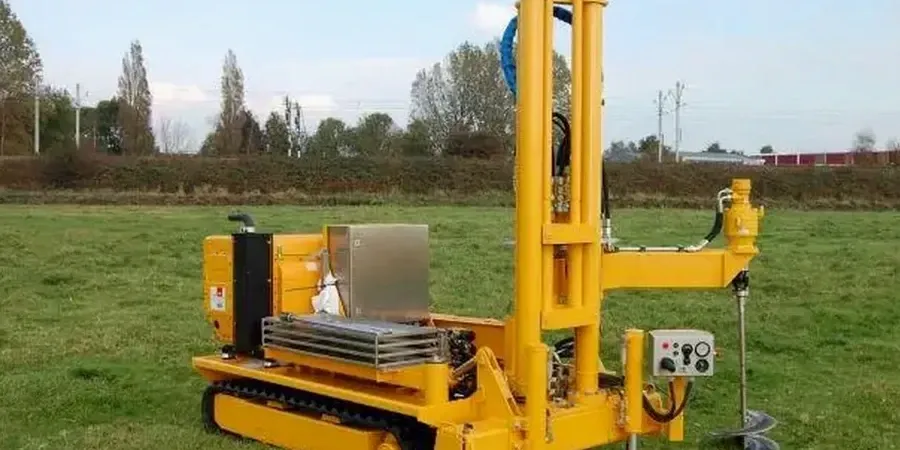
Houston's geology doesn't forgive assumptions. The city sits on the Beaumont Formation, a mix of high-plasticity clays, silts, and loose sands deposited by ancient river systems. Summer heat bakes the surface while afternoon thunderstorms saturate the topsoil, creating a shrink-swell cycle that punishes poorly designed foundations. A soil mechanics study here isn't a generic lab report. It's about quantifying the specific behavior of these Gulf Coast sediments under load, considering the city's flat topography and poor natural drainage. We combine index testing with advanced strength parameters to predict how the ground will react, from a residential slab in Katy to a mid-rise in Midtown. Getting this right means fewer surprises during excavation and a foundation that doesn't move with the seasons. Linking index data with [spt-drilling](https://www.sondajespt.com/spt-drilling) gives us the in-situ density profile that lab tests alone can miss.

In Houston, your foundation's worst enemy isn't the load it carries; it's the water moving through the soil underneath it.
Geotechnical Engineering in Houston
Technical reference — Houston

Our service areas

Local geology


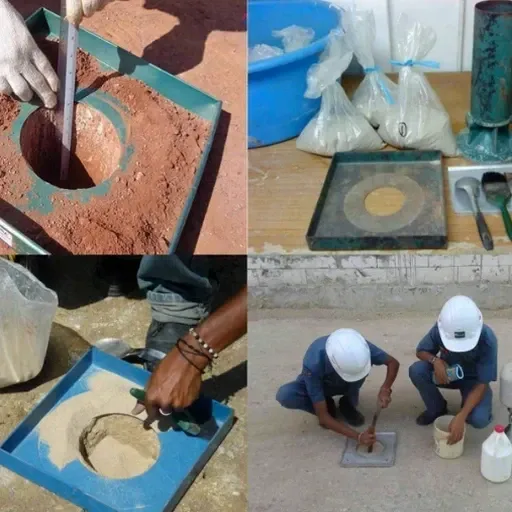
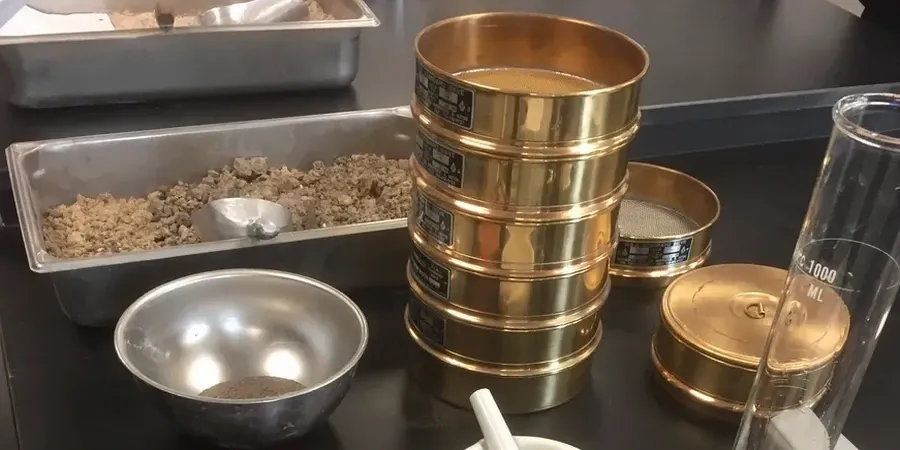
Our testing program follows ASTM D2487 for classification and ASTM D4318 for Atterberg limits, the baseline for any Houston project. But we go further. For expansive clays, we run ASTM D4546 swell tests at multiple moisture contents to simulate wet and dry seasons. For shear strength, we use consolidated-undrained triaxial tests (ASTM D4767) with pore pressure measurement, critical for modeling short-term stability in saturated clays. Consolidation testing per ASTM D2435 gives us the settlement timeline. We also grind samples for hydrometer analysis to capture the full grain-size curve. In areas with potential liquefaction, like the loosely deposited sands east of downtown, we pair cyclic triaxial data with [liquefaction](https://www.sondajespt.com/liquefaction) assessments to guide Improvement decisions. Every parameter ties directly to a design decision, from footing width to slab reinforcement ratio.

Reference standards

Key ASTM standards for soil classification and testing (D2487, D4318, D4767, D4546) along with ASCE 7 and IBC Chapter 18 govern our analyses in Houston.

Need a geotechnical assessment?

Reply within 24h.

Email: contact@geotechnicalengineering1.org

Why choose us

Differential movement poses the primary hazard in Houston. It is common to observe one building corner settling while another heaves, leading to cracked walls and jammed doors. Such issues typically stem from moisture migration beneath the foundation. A thorough soil mechanics study pinpoints the active zone depth where seasonal water content shifts are most pronounced. For sites containing deep fat clay layers, swell-consolidation tests directly measure expansion pressure. Additionally, bearing capacity failure can occur in near-surface sands along Buffalo Bayou tributaries. These sands may appear dense but quickly lose strength when wet. We quantify this using drained and undrained shear tests, then verify results with CPT data (https://www.sondajespt.com/cpt-test) to precisely locate weak seams. The objective is to supply structural engineers with concrete figures rather than generic estimates.

Technical data

ParameterTypical value
Active Zone Depth8-15 ft typical in Harris County
Plasticity Index (PI)25-45% for Beaumont clays
Undrained Shear Strength500-2000 psf depending on depth
Swell Potential2-4 inches possible in dry conditions
Consolidation SettlementCalculated per ASTM D2435
Soil ClassificationCH, CL, SC per USCS
Bearing Capacity1500-3000 psf for stiff clays

Questions and answers

How long does a full soil mechanics study take in Houston?

Standard index tests require 3-5 business days. Advanced tests, such as triaxial shear or swell-consolidation, take 7-14 days because of necessary saturation and loading phases. We deliver preliminary parameters within 48 hours of sample arrival to avoid delaying your design.

What's the cost range for a soil mechanics study on a residential lot?

For a standard single-family lot in Houston, costs range from US$3,410 to US$4,520. This includes classification, Atterberg limits, swell testing, and a bearing capacity recommendation. The final price varies with sample count and whether shear strength testing is required.

Do I need this study if I already have a geotechnical report?

A geotechnical report typically contains field data like SPT blow counts, while a soil mechanics study provides laboratory-derived strength and compressibility parameters essential for foundation design. They are complementary; neither replaces the other.

Can you test samples from depths below the active zone?

Yes, we routinely test samples from 20 to 40 feet deep, especially when deep foundations or mat foundations are under consideration. Deeper samples help identify bearing strata and compute total settlement of the soil column.

Location and service area

We serve projects across Houston and surrounding areas.

View larger map