GEOTECHNICAL ENGINEERING
HOUSTON
HomeLaboratoryLaboratory CBR test

Laboratory CBR Testing in Houston: Subgrade Strength for Pavement Design

Evidence-based design. Reliable delivery.

LEARN MORE

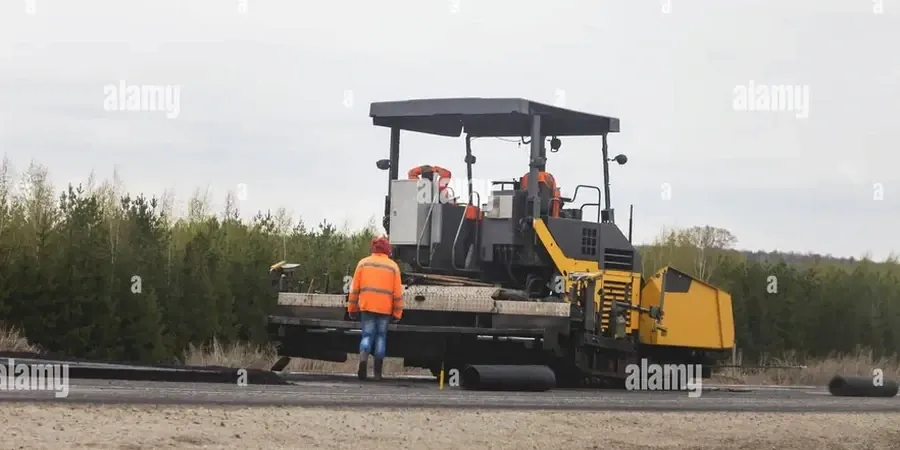
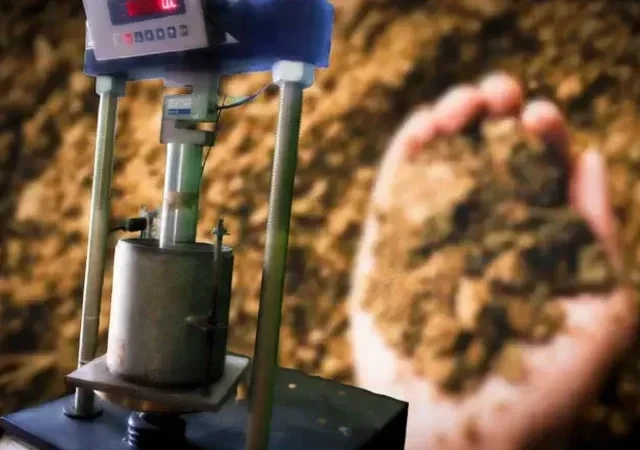
Houston's geology presents a genuine challenge for pavement engineers. The city sits atop the Beaumont Formation, a vast deposit of Pleistocene-age clays that shrink and swell with every seasonal rain cycle. When you factor in the region's subtropical humidity and the notorious 'gumbo' clay that turns to soup after a downpour, subgrade strength becomes anything but predictable. A laboratory CBR test strips away that uncertainty. By compacting soil samples at controlled moisture and density and measuring their resistance to a standardized piston, we determine the California Bearing Ratio that dictates layer thicknesses for both flexible pavement and rigid pavement structures. This isn't a generic index; it's a design input calibrated to Houston's moisture-sensitive soils. Our laboratory follows ASTM D1883 and AASHTO T 193 procedures, preparing specimens at multiple compaction points to map how strength degrades when the clay absorbs water from a broken curb or a leaking irrigation line. The result is a pavement section that holds up to the 50-inch annual rainfall and the logistics traffic pounding the I-10 and Beltway 8 corridors.

A Houston subgrade that measures CBR 18 at optimum moisture can drop below CBR 3 after a four-day soak—that single data point changes the pavement section from 6 inches of asphalt to 12.
Our service areas

Process overview

The most common mistake we see in Houston pavement failures isn't a bad mix design—it's ignoring the soaked CBR condition. Too many projects run a single-point CBR at optimum moisture, get a value around 15 or 20, and assume the subgrade will perform. Then a summer thunderstorm saturates the expansive clay, the soaked CBR drops below 3, and the asphalt starts rutting within two years. The laboratory CBR test resolves this by running specimens through a four-day soaking period that simulates the worst-case moisture scenario beneath an impermeable pavement surface. We compact specimens in 6-inch molds using modified Proctor energy per ASTM D1557, apply surcharge weights that replicate the overburden pressure of the final pavement structure, and measure penetration resistance at 0.05 inches per minute. The load-penetration curve reveals not just the CBR at 0.1 and 0.2 inches, but the swell percentage and the stress-strain behavior of the treated or untreated soil. For Houston's fat clays with PI values above 40, we often combine the laboratory CBR test with Atterberg limits to correlate plasticity with strength loss, and with Proctor tests to confirm the compaction curve used for specimen preparation. This multi-point approach yields a family of CBR values that feeds directly into the AASHTO 1993 pavement design equation or the Mechanistic-Empirical Pavement Design Guide now adopted by TxDOT for major corridors.
Laboratory CBR Testing in Houston: Subgrade Strength for Pavement Design
Technical reference — Houston

Local context

Underneath Greater Houston, the Beaumont and Lissie formations consist of montmorillonite-rich clays whose liquid limits often surpass 60 and plasticity indices exceed 35. When saturated, these soils can generate swell pressures over 15,000 psf, sufficient to lift lightly loaded pavement slabs. The laboratory CBR test condenses years of field behavior into a measurable outcome by soaking specimens for four days. A soaked CBR below 2 necessitates either chemical stabilization—typically lime treatment as per TxDOT standards—or a thicker granular base. If swell percentages exceed 2%, even well-designed flexible pavements will likely develop longitudinal cracking along wheelpaths due to clay heave and shrinkage. The CBR test quantifies these risks prior to any aggregate placement. For industrial parks and distribution centers near the Port of Houston, where container trucks result in millions of ESALs over the design life, a subgrade CBR of 8 versus 4 leads to a choice between a 10-inch lime-treated subbase and a 16-inch full-depth asphalt section. The cost difference is significant, yet the test cost is minimal in comparison.

Need a geotechnical assessment?

Reply within 24h.

Email: contact@geotechnicalengineering1.org

Reference standards


Key standards for CBR testing encompass ASTM D1883-21, AASHTO T 193-22, ASTM D1557-12(2021), TxDOT Tex-117-E, and the AASHTO Guide for Design of Pavement Structures (1993, with 1998 supplement).

Technical data

ParameterTypical value
StandardASTM D1883-21 / AASHTO T 193-22
Mold diameter6.0 in (152.4 mm)
Compaction energyModified Proctor (56 blows/layer, 5 layers)
Soaking period96 hours (4 days) submerged
Penetration rate0.05 in/min (1.27 mm/min)
Surcharge weight10 lb annular + slotted plates (simulates pavement overburden)
Swell measurementDial gauge on tripod, readings at 0, 24, 48, 72, 96 h
Reported valuesCBR at 0.1 in and 0.2 in penetration; soaked and unsoaked; swell %

Questions and answers


How much does a laboratory CBR test cost in Houston?

A single-point laboratory CBR test (one specimen, either soaked or unsoaked) generally costs between US$120 and US$210, depending on whether a full compaction curve and swell monitoring are required. A three-point CBR determination for pavement design—involving three specimens at varying moisture contents, all soaked—is priced proportionally. We supply fixed quotes once project specifications and the number of soil types to test are reviewed.

What is the difference between a soaked and unsoaked CBR test?

An unsoaked CBR test evaluates soil strength at the compaction moisture content, representing construction conditions. In contrast, a soaked CBR test immerses the compacted specimen in water for 96 hours before penetration, mimicking the worst-case saturated state after years of service. For Houston's expansive clays, the soaked CBR always controls pavement thickness design. The disparity can be substantial: a clay with an unsoaked CBR of 15 may drop to a soaked CBR of 2 or 3.

How many CBR points do I need for a pavement design?

For standard flexible pavement design in Houston, we advise a minimum three-point CBR determination for each distinct soil type encountered. This involves compacting three specimens at different moisture contents—typically optimum, optimum+2%, and optimum-2%—and soaking all three. The lowest soaked CBR value dictates the design. For large projects such as distribution centers or roadway corridors, additional points may be necessary to address spatial variability across the site.

Does TxDOT require laboratory CBR tests for subgrade acceptance?

TxDOT specifications do not directly use CBR for subgrade acceptance; instead, they depend on density and moisture control during construction. However, the pavement design process—whether following the AASHTO 1993 guide or the MEPDG—requires a design CBR value for the subgrade. Thus, while the CBR test is a design-phase requirement and not a construction QA/QC test, it is crucial for determining the structural number and layer thicknesses in the pavement cross-section.

Location and service area

We serve projects across Houston and surrounding areas.

View larger map