Safe and durable construction throughout Southeast Texas relies fundamentally on geotechnical investigation in Houston. This discipline involves methodically evaluating underground soil, rock, and water conditions to inform designs and reduce hazards. Houston's intricate geology—ranging from expansive clays to concealed fault lines—requires thorough exploration prior to any excavation. Beyond meeting code mandates, a well-conducted investigation helps avoid expensive structural issues, project lags, and future legal complications.
Houston is built on a diverse geological terrain created by ancient deltaic deposits, coastal actions, and continuous subsidence. The prevailing formation is the Beaumont, characterized by stiff to very stiff clays layered with silt and sand. Such soils have high plasticity and pronounced expansion and contraction tendencies, which frequently cause foundation issues. Moreover, despite its level landscape, the area contains active growth faults—some beneath key roads—that can gradually shift buildings. Investigating these features via specific site and laboratory studies is essential, not merely recommended, for proper engineering.
In Houston, geotechnical work follows ASTM standards, especially those from the American Society for Testing and Materials. A licensed Professional Engineer must take responsible charge of all such activities, as required by the Texas Board of Professional Engineers and Land Surveyors. The City of Houston and other municipalities apply the International Building Code (IBC) with local modifications, dictating minimum borehole depths, number of borings, and report details according to construction type and risk level. Adherence to ASTM D1586 (Standard Penetration Test) and ASTM D2487 (soil classification) is standard practice.
The scope of projects requiring geotechnical investigation in Houston is vast. High-rise towers in the Galleria area demand deep borings to assess bearing capacity and lateral earth pressures for deep foundations. Residential developers across the Energy Corridor and Kingwood rely on investigations to design slab-on-grade foundations that can tolerate expansive soils. Critical infrastructure—from the widening of Interstate 10 to the expansion of flood control basins—requires sophisticated analysis of liquefaction potential and seepage. A key tool in this effort is the CPT (Cone Penetration Test), which provides a continuous profile of soil behavior, proving invaluable for stratigraphic mapping and settlement analysis in the soft clays near Buffalo Bayou.
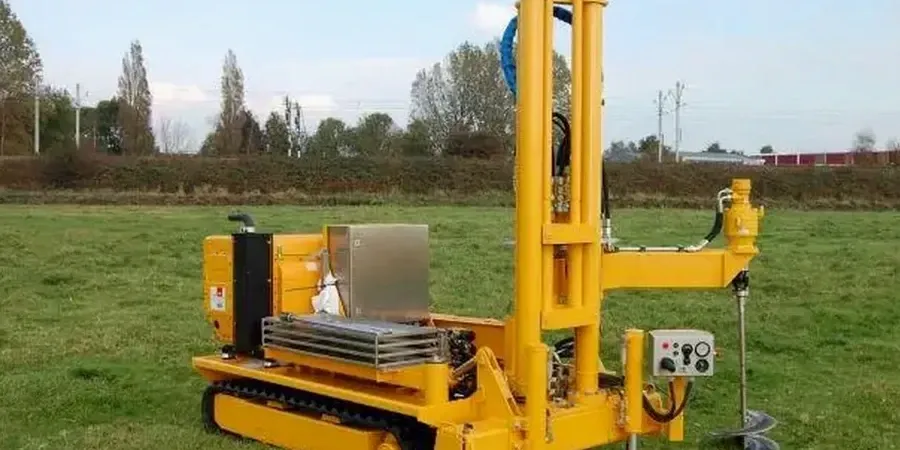
Typical geotechnical investigation includes drilling test holes, retrieving soil specimens, and conducting field tests such as the SPT. Subsequent lab work measures index attributes, shear strength, and consolidation behavior. The resulting report advises on foundation selection, safe bearing capacity, and potential soil enhancement, all aligning with ASTM criteria and local code.
The clays of the Beaumont Formation in Houston have elevated shrink-swell potential, a major reason for foundation damage. Any study must precisely evaluate this property using Atterberg limits and suction tests. The outcomes determine if a slab-on-grade foundation needs stiffening beams, over-excavation and backfill, or chemical treatment to reduce uneven movement throughout the area's alternating wet and dry periods.
For deep foundations such as drilled piers or driven piles—frequent in Houston's tall buildings—borings extending at least 30 feet are necessary. Such deep investigations are also mandated when near-surface soils lack sufficient strength, when evaluating subsidence impacts, or when construction lies close to known fault lines, verifying that the load-bearing layer is sound and free from deep-seated displacement.
The City of Houston enforces its own adoption of the IBC for geotechnical investigations, and such reports require a seal from a Texas Professional Engineer. Professional behavior is regulated by the Texas Engineering Practice Act. Furthermore, the Harris County Flood Control District might mandate additional study for projects in flood-prone zones, emphasizing ground stability and water seepage management.