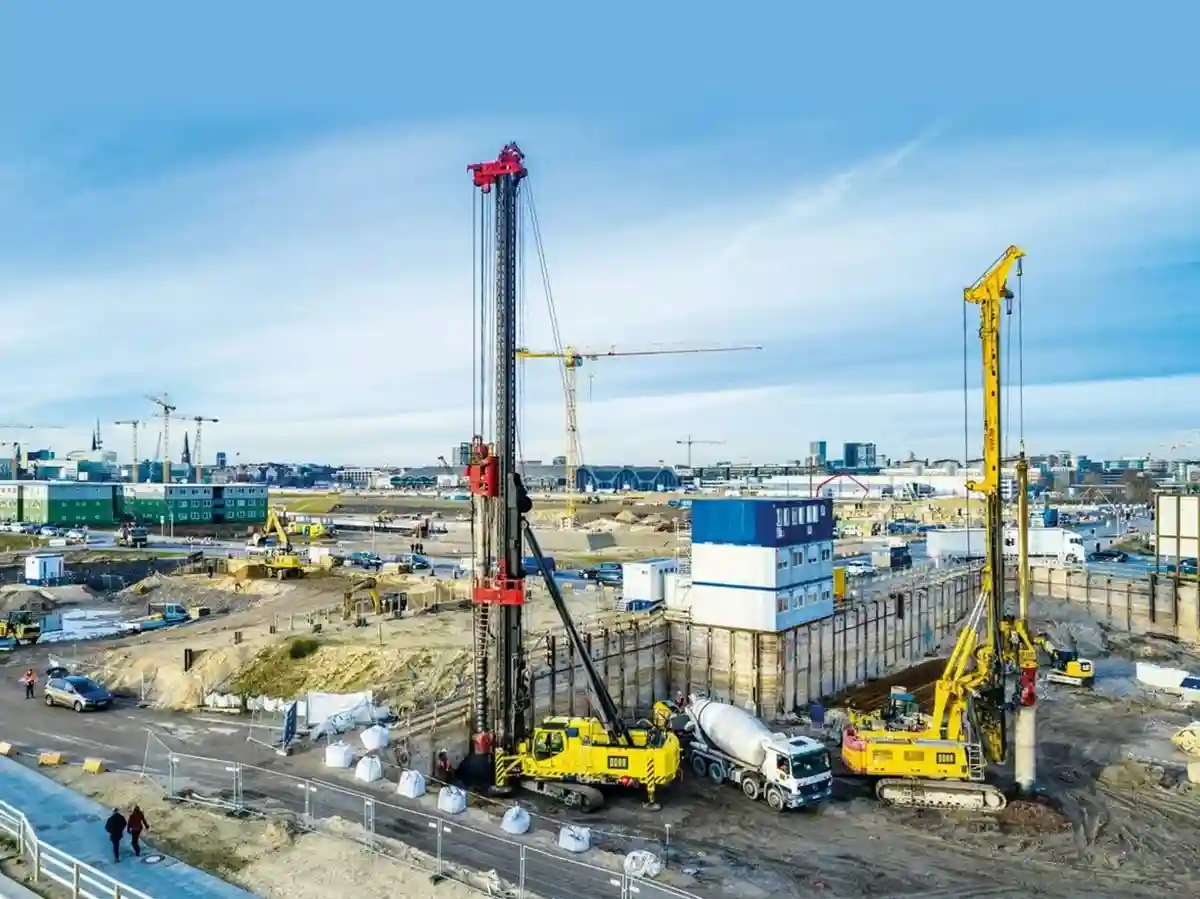
In Houston, the ground is rarely uniform—a complex layering of overconsolidated clays, interbedded silts, and isolated sand lenses that shrink, swell, and lose strength upon saturation. That is why a drill rig equipped with a hollow-stem auger is first mobilized through the stiff fissured clays of Harris County, cutting through Pleistocene Beaumont Formation sediment while the geotechnical team records material as it emerges. Before any pile diameter or tip elevation is chosen, we deploy rotary drill units to obtain high-quality core samples and perform field tests that determine shaft resistance and toe bearing values. These measurements directly inform the axial and lateral analysis required by IBC 2018 and the FHWA Driven Pile Manual, yielding a pile system that accommodates local soil behavior rather than opposing it.
A pile in Houston does two jobs at once: it transfers structural load past the active zone of expansive clay and resists lateral demands from hurricane-force winds.