GEOTECHNICAL ENGINEERING
HOUSTON
HomeSlopes & WallsRetaining wall design

Retaining Wall Design in Houston: Geotechnical Solutions for the Gulf Coast

Evidence-based design. Reliable delivery.

LEARN MORE

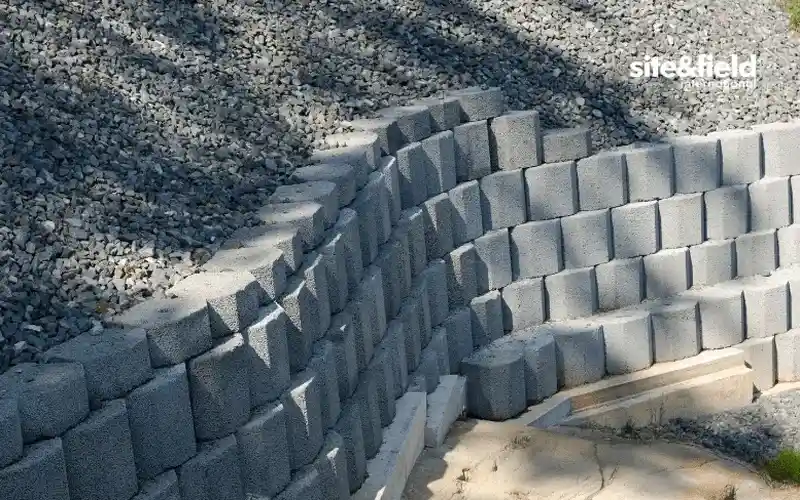
Houston's population exceeds two million, and at only 80 feet above sea level, the city's rapid growth puts immense pressure on its ground. Due to the level terrain and numerous bayous, alterations in grade of six feet or more are frequently necessary for both houses and commercial lots. In this context, a well-engineered retaining wall is essential, not optional, especially given the Beaumont Formation's stiff, heavily consolidated clays that expand considerably with water exposure. We often encounter failed walls where builders treated Houston's soil as inert, failing to account for the intense lateral forces that arise after a dry summer followed by a tropical storm. Our methodology starts with measuring active and at-rest earth pressures through site-specific lab consolidation tests, because standard assumptions are unreliable along the Gulf Coast.

Lateral earth pressures on a Houston retaining wall can double within 48 hours of a major storm if the drainage system wasn't designed for the actual permeability of the local clay.
Our service areas

Process overview

Houston sits squarely in a zone where the depth to groundwater can fluctuate from 8 feet during a dry August to less than 3 feet after Hurricane Harvey-level rainfall events. This means that retaining wall design here must account for hydrostatic pressure as a primary load case, not an afterthought. We frequently specify cantilevered reinforced concrete walls founded on drilled shafts that bypass the active moisture zone, anchoring them into the deeper, stable strata of the underlying Lissie Formation to resist overturning. When backfill is required, we insist on open-graded, free-draining material compacted in lifts with strict density control; the expansive gumbo clays excavated from the site are never suitable for reuse behind the stem. For taller walls exceeding 12 feet, we integrate CPT testing to map the continuous stratigraphy and identify any thin sand lenses that could act as preferential drainage paths, which would concentrate seepage forces and undermine the wall's heel if left unaddressed during construction.
Retaining Wall Design in Houston: Geotechnical Solutions for the Gulf Coast
Technical reference — Houston

Local context

The City of Houston has adopted the International Building Code 2021 with local changes, requiring retaining structures to withstand sliding, overturning, and overall instability under the load combinations specified in ASCE 7-22 Chapter 2. This is particularly crucial not merely for code compliance but because Houston's expansive clays create swell pressures that can surpass the passive resistance at the toe if the foundation lacks sufficient depth. We have examined cases where a wall tilted outward two inches within a single wet season due to backfilling with native clay, which formed a mass of expansive material that pushed sideways against the wall stem. The most hazardous situation involves a wall retaining a slope near a bayou tributary, where continuous rain can saturate the soil, reducing the clay's undrained shear strength by 40% or more, leading to a circular slip surface that carries the wall along. Our designs incorporate a geotextile filter fabric and a continuous gravel chimney drain to capture seepage before it reaches the wall's back, plus a rigid base key that anchors into the underlying Pleistocene deposits to prevent sliding.

Need a geotechnical assessment?

Reply within 24h.

Email: contact@geotechnicalengineering1.org

Visual overview


Reference standards

Key standards include IBC 2021 Chapter 18 (Soils and Foundations, as adopted by Houston), ASCE 7-22 for design loads including seismic and earth pressure, ASTM D4546-21 for swell/collapse testing, AASHTO LRFD Bridge Design Specifications 10th Edition Section 11 for abutments and walls, and FHWA-NHI-05-037 (Geotechnical Engineering Circular No. 2 on Earth Retaining Systems).

Technical data


ParameterTypical value
Design Life (per IBC Table 1604.5)50 years minimum for permanent walls
Active Earth Pressure Coefficient (Ka)Determined via consolidated-drained triaxial per ASTM D7181
Backfill Friction Angle34° to 38° for clean sand; 28° or less for silty sand
Base Sliding ResistanceFriction coefficient 0.35–0.45 for cast-in-place concrete on Beaumont clay
Global Stability Safety Factor≥1.5 for static, ≥1.1 for seismic (ASCE 7-22 §11.8)
Hydrostatic UpliftFull buoyancy assumed unless a functioning drain is installed
Seismic Coefficient (kh)0.05–0.10g based on 2,475-year return period in Houston
Expansive Clay Swell PressureUp to 4,500 psf measured via ASTM D4546 method C

Questions and answers

How much does a retaining wall design typically cost in Houston?

In Houston, the typical engineering design charge for a retaining wall (residential or commercial) falls between US$980 and US$4,560. The ultimate price is influenced by the wall's height, soil profile complexity, and any necessary coordination with the city's drainage review.

Do I need a permit for a retaining wall in Houston?

A structural permit from the City of Houston is mandatory for any retaining wall taller than 4 feet (measured from footing base to wall top). For walls carrying a surcharge—like a driveway or building—sealed calculations from a Texas-licensed Professional Engineer are necessary irrespective of height.

What type of retaining wall works best in Houston's expansive clay soils?

Our typical recommendation is cast-in-place reinforced concrete cantilever walls on drilled shafts or a deep key reaching into the more stable Lissie Formation. This design separates the wall from seasonal moisture variations in the top 8–10 feet of Beaumont clay, which causes most swell/shrink damage to lighter structures.

How do you handle the high groundwater table in retaining wall design?

Behind the wall we install a continuous drainage setup: a geotextile filter, a 12-inch-wide gravel chimney, and a 4-inch perforated PVC pipe that drains to daylight or a sump. Hydrostatic pressure is modeled as a triangular load in stability checks, and we confirm drain capacity surpasses anticipated seepage from backfill and retained soil during a 100-year storm.

Location and service area

We serve projects across Houston and surrounding areas. More info.

View larger map