GEOTECHNICAL ENGINEERING
HOUSTON
HomeExcavationsGeotechnical design of deep excavations

Geotechnical Design of Deep Excavations in Houston, Texas

Evidence-based design. Reliable delivery.

LEARN MORE

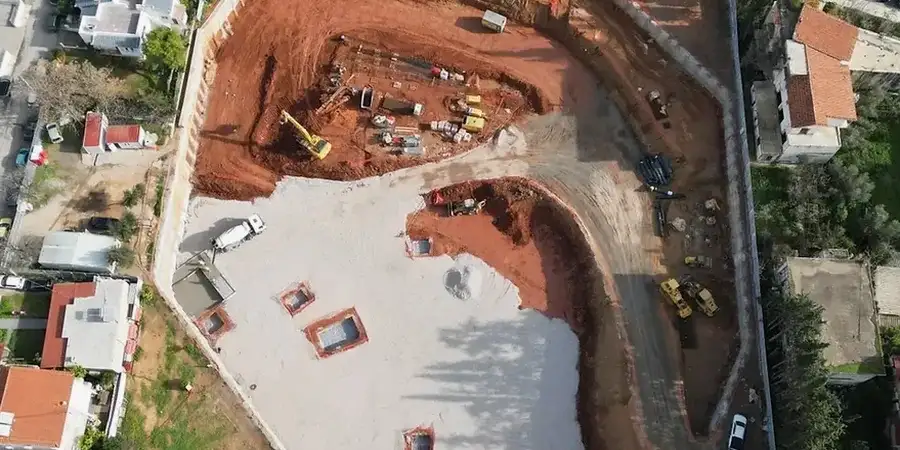
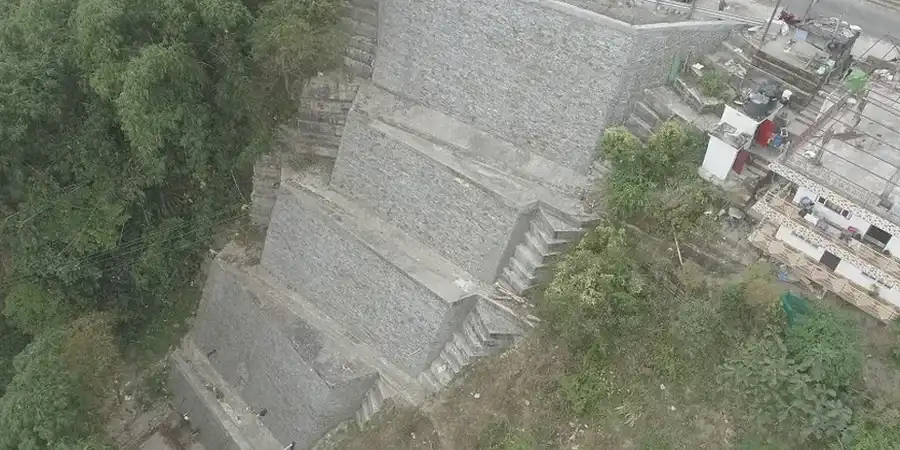
Houston's location on the Gulf Coastal Plain means deep excavation work contends with the Beaumont and Lissie formations—overconsolidated clays and silty sands deposited during Pleistocene interglacial periods. With an average elevation just 50 feet above sea level and the water table often encountered within 6 to 10 feet of the surface, maintaining excavation stability is not a matter of simply cutting and hoping. The city's subtropical humidity accelerates desiccation cracking near the surface, yet saturates the deeper fat clays that govern base heave and wall movements. Our technical staff addresses these conditions through staged analysis that integrates slope stability assessments where perimeter setbacks are tight, confirming that each bracing level and tieback anchor responds to the real stratigraphy logged during site investigation.

In Houston's fat clays, the difference between a stable cut and a creeping failure often lies in the first 72 hours after a bench is opened.
Our service areas

Process overview

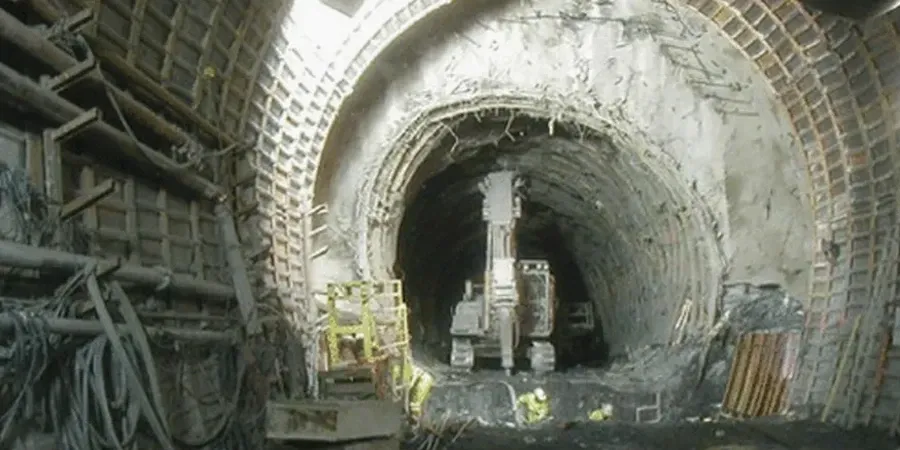
Beneath Houston's pavement network, the geologic profile shifts from stiff Beaumont clay with plasticity indices exceeding 25 to interbedded sand lenses in the underlying Lissie strata, creating differential stiffness that can concentrate stress on soldier pile and lagging systems. A deep excavation here rarely penetrates homogeneous material; more commonly, the cut face exposes a sequence of medium-stiff to hard clay transitioning to a water-bearing sand layer below elevation -20 feet.
Our approach relies on total stress analysis (short-term, undrained) for the clay-dominated phases and effective stress parameters for the drained sand units, following FHWA-NHI-05-042 methodologies. Lateral earth pressure distribution follows the trapezoidal pattern recommended for stiff fissured clays, while sand seams are evaluated for piping potential using critical gradient criteria.
Groundwater control receives equal weight: we size deep wells or eductor systems based on hydraulic conductivity values measured through in-situ packer tests, ensuring the target drawdown reaches at least two feet below final subgrade before excavation resumes. The proximity of Buffalo Bayou and the city's extensive network of underground drainage infrastructure adds a further constraint, requiring settlement predictions that protect adjacent utilities and slab-on-grade structures.
Geotechnical Design of Deep Excavations in Houston, Texas
Technical reference — Houston

Local context

The Houston Public Works Infrastructure Design Manual along with ASCE 7 set strict performance criteria for deep excavations, especially when located near the 100-year floodplain boundaries that cover large parts of Harris County. A frequently disregarded hazard in these overconsolidated clays is time-dependent softening; due to pore pressure equalization after excavation, the safety factor against basal heave can decrease by 15% to 20% over several weeks, even in the absence of extra rainfall. If an excavation stays open during Houston's summer thunderstorm season, water can quickly infiltrate through surface desiccation cracks, leading to localized sloughing or more severe rotational failures in temporary slopes. To address this, the design includes a monitoring scheme using inclinometers, piezometers, and optical survey points read at frequencies based on construction activity, along with predefined trigger levels that determine when to install backup struts or re-compact the bench.

Need a geotechnical assessment?

Reply within 24h.

Email: contact@geotechnicalengineering1.org

Visual overview


Reference standards

The relevant standards include ASTM D1586 (Standard Test Method for SPT and Split-Barrel Sampling), ASTM D2487 (Standard Practice for Soil Classification using USCS), and FHWA-NHI-05-042 (guidance on Soil Nail Walls and Excavation Support Systems).

Technical data


ParameterTypical value
Dominant soil typeBeaumont clay (CH) / Lissie interbedded sands
Undrained shear strength (clay)800 – 2,500 psf, increasing with depth
Typical depth to groundwater6 – 10 ft below existing grade
Lateral earth pressure modelTrapezoidal (FHWA stiff clay), apparent pressure for sands
Analysis frameworkTotal stress (undrained) + effective stress (drained) staged
Base heave factor of safetyMinimum 1.5 per Terzaghi-Bjerrum method
Reference standardFHWA-NHI-05-042, IBC Chapter 18

Questions and answers

What is the typical cost range for geotechnical design of a deep excavation in Houston?

For a commercial excavation situated in Houston's Beaumont clay, the complete geotechnical engineering work—which encompasses soil-structure interaction analysis, support system design, and a dewatering plan—typically costs between US$2,380 and US$9,060, with the final amount determined by excavation depth, how close it is to neighboring buildings, and how many levels of bracing are needed.

How does Houston's high water table affect deep excavation design?

Since groundwater is usually only six to ten feet below the surface, the design must incorporate active dewatering and positive drainage systems; without them, pore pressure behind the wall could surpass the intended lateral earth pressure envelope, and base instability becomes a significant risk, particularly in the interbedded sand layers of the Lissie formation.

Which failure mode is most critical in Houston's stiff clays during excavation?

The primary failure mechanism is basal heave. The factor of safety is checked using the Terzaghi-Bjerrum method, which employs undrained shear strength profiles obtained from pressuremeter tests or consolidated-undrained triaxial testing, to confirm that it stays above 1.5 at every excavation stage.

Location and service area

We serve projects across Houston and surrounding areas.

View larger map