GEOTECHNICAL ENGINEERING
HOUSTON
HomeRoadwayFlexible pavement design

Flexible Pavement Design for Houston’s Expansive Clay Subgrades

Evidence-based design. Reliable delivery.

LEARN MORE

In the Houston area, what we see again and again is a pavement that looked fine after construction but develops alligator cracking within two or three summers because the subgrade wasn’t characterized for the shrink-swell cycles that define our coastal plain geology. Designing a flexible pavement here is less about the asphalt mix alone and more about building a structural section that bridges the seasonal volume changes in the Beaumont and Lissie formation clays while draining the frequent stormwater that sits on flat grades. When we run the AASHTO 93 layer analysis, we always cross-check the resilient modulus with site-specific CBR and R-value testing because generic county soil surveys rarely capture the lens of fat clay that may sit right beneath the proposed subgrade elevation. Many of the corridors we have worked on from Katy to Pasadena also benefit from a MASW survey to confirm shear-wave velocity and identify any loose alluvial pockets that would cause differential rutting under the 18-kip equivalent single-axle loads that dominate the I-10 and Beltway 8 corridors.

A Houston flexible pavement that ignores the soaked CBR of the subgrade is designing for the one week of drought, not the fifty-one weeks of moisture.
Our service areas

Process overview

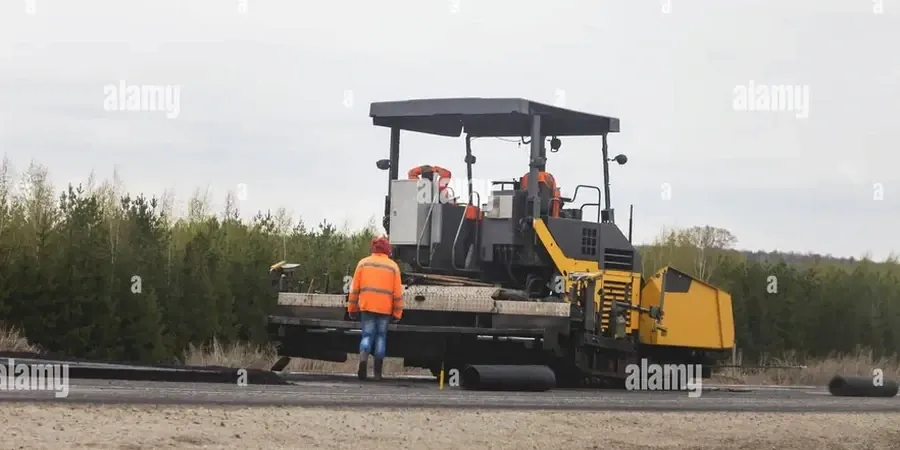
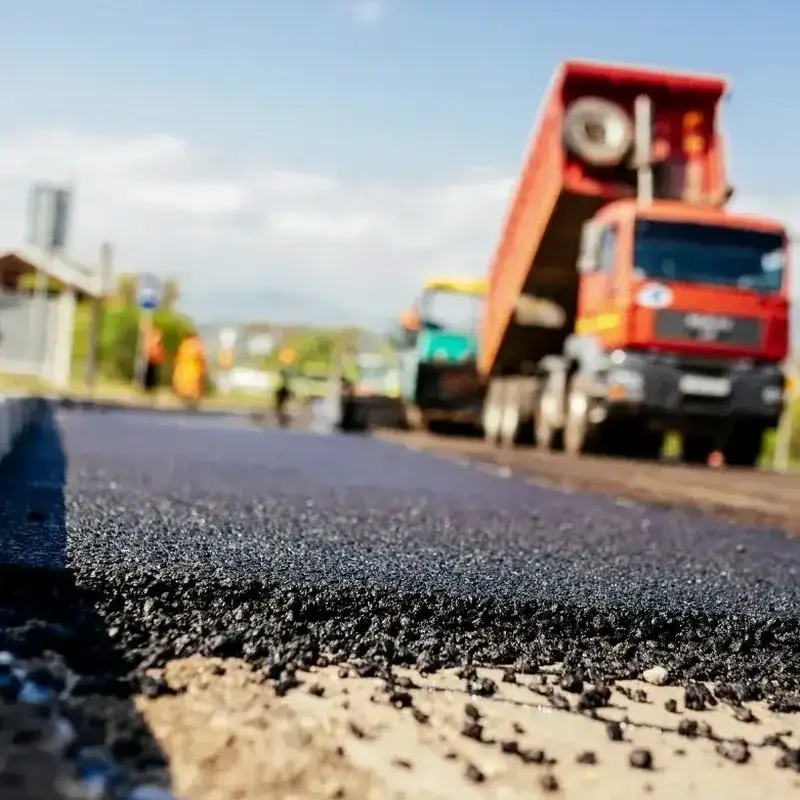
The flexible pavement sections we specify are built around a multi-layer elastic model that treats the hot-mix asphalt surface, the crushed limestone base, and the lime-stabilized subgrade as a single system whose deflection bowl under a standard 9,000-pound wheel load must stay within TxDOT’s allowable vertical strain at the top of the subgrade. Our field crew uses nuclear density gauges calibrated to ASTM D6938 to verify compaction on the lime-treated layer while pulling undisturbed Shelby tubes from the underlying clay to run soaked CBR in our Houston lab — because the critical condition is always the subgrade after a week of tropical rainfall, not the dry-weather stiffness. The pavement design report includes the structural number, layer coefficients for each material, and a drainage coefficient that accounts for the fact that much of Harris County sits within the 100-year floodplain with a water table that can rise to within 18 inches of the finished grade during hurricane season. We often specify a geogrid reinforcement at the base-subgrade interface for sections that will carry heavy oilfield equipment traffic near the Port of Houston, where the combination of saturated fat clay and frequent channel deepening projects pushes the required structural number beyond what a conventional crushed-stone section can deliver economically.
Flexible Pavement Design for Houston’s Expansive Clay Subgrades
Technical reference — Houston

Local context

The expansive clays of the Beaumont Formation that underlie much of Houston can exert swell pressures exceeding 15,000 pounds per square foot when they wet up, which is enough to heave a lightly loaded flexible pavement by two to three inches over a single wet winter. Add to that the subsidence that has plagued the Houston-Galveston region for decades — with some areas having dropped more than 10 feet since the 1940s due to groundwater withdrawal — and the pavement section must also accommodate long-wavelength differential settlement that a purely structural model does not capture. Our approach includes a volume-change assessment using the TxDOT Tex-124-E method so that the lime treatment depth is specified not by rule of thumb but by the actual plasticity index and the desired reduction in swell potential. In the east Houston industrial corridors where perched water sits in the upper five feet of the profile for months at a time, we model the pavement using the saturated hydraulic conductivity from in-situ permeability tests to confirm that the drainage layer can evacuate water faster than the design storm delivers it, otherwise the base course pumps fines and the asphalt fatigues from the bottom up.

Need a geotechnical assessment?

Reply within 24h.

Email: contact@geotechnicalengineering1.org

Visual overview


Reference standards

Our design references include the AASHTO 1993 Guide and the TxDOT Pavement Design Guide (2020). Testing follows ASTM D1883 for soaked CBR on flexible subgrade, Tex-124-E for swell, and ASTM D6938 for nuclear density gauge compaction control. Additionally, we use FHWA NHI-05-037 for geotechnical aspects.

Technical data


ParameterTypical value
Design methodAASHTO 1993 / MEPDG (AASHTOWare) Tier 2
Subgrade inputSoaked CBR (ASTM D1883) and resilient modulus (Mr) from repeated load triaxial
Base courseCrushed limestone (TxDOT Grade 2) or cement-stabilized sand
Design ESALs (20-yr)Determined from traffic counts and FHWA vehicle class distribution
Drainage coefficientAdjusted for Houston rainfall intensity (IDF curves from Harris County Flood Control)
Layer verificationFWD deflection basin back-calculation (ASTM D4694 / D4695)
Swelling mitigationLime or cement stabilization per TxDOT Tex-121-E; moisture barrier if required

Questions and answers

How much does a flexible pavement design package cost for a Houston project?

The cost of our flexible pavement design reports ranges from US$1,480 to US$5,360. This depends on factors such as alignment length, number of subgrade borings, and whether FWD testing on an existing road is needed. A simple project like a short commercial driveway with just two borings and a basic AASHTO 93 calculation would be near the minimum. In contrast, a multi-lane industrial road requiring full MEPDG calibration and geogrid optimization would be at the maximum.

What makes flexible pavement design different in Houston compared to drier parts of Texas?

Because of the high-plasticity Beaumont clays, a shallow water table that climbs during hurricane season, and the flat topography impeding drainage, we assume a soaked subgrade condition throughout the year. Consequently, we use higher structural numbers, deeper lime stabilization, and a carefully chosen drainage coefficient — factors that would not normally be included in a design for the drier Edwards Plateau.

Do you use the AASHTO 93 method or the newer MEPDG for Houston roads?

We are skilled in both methods and choose one based on project needs. For typical commercial and light industrial pavements, the AASHTO 93 method with a conservative soaked CBR input works well and is economical. For high-traffic roads or when the owner seeks optimization for particular failure types such as bottom-up fatigue, thermal cracking, or subgrade rutting, we perform a Tier 2 MEPDG calibration incorporating Houston climate data and local traffic spectra.

Location and service area

We serve projects across Houston and surrounding areas.

View larger map