GEOTECHNICAL ENGINEERING
HOUSTON
HomeInvestigationSPT (Standard Penetration Test)

SPT Testing in Houston: Geotechnical Data That Dictates Foundation Design

Evidence-based design. Reliable delivery.

LEARN MORE

The most expensive mistake we see in the Houston metro isn't a foundation crack; it's a set of SPT borings logged without correcting for the 20-foot rod length in a Beaumont clay profile. You end up with N-values that look 30% higher than reality, a geotech signs off on a spreadsheet bearing capacity, and two years later the slab-on-grade near Cypress Creek shows differential settlement exceeding an inch. The IBC Chapter 18 and the City of Houston amendment require SPT data to be corrected for energy, overburden, and rod length—specifically when you're dealing with the stiff, desiccated crust over soft clay that defines the upper 10 feet across Harris County. Running the test right means a CME-75 auto-hammer with an energy ratio calibration certificate, split-spoon liners per ASTM D1586-18, and a driller that counts blows in three 6-inch increments without rounding. Our team has logged thousands of boreholes from The Woodlands down to Pearland, and the difference between a sloppy SPT and a defensible one is the difference between a mat foundation that stays level and a lawsuit. When the clay turns slick and the sand lenses at 18 feet start chugging water, we often pair the SPT run with a CPT test for continuous tip resistance and sleeve friction, which helps catch thin sand seams that the spoon skips entirely.

An uncorrected SPT N-value in Houston's overconsolidated clays can overstate bearing capacity by 40%. Energy and overburden corrections are not optional.
Our service areas

Process overview

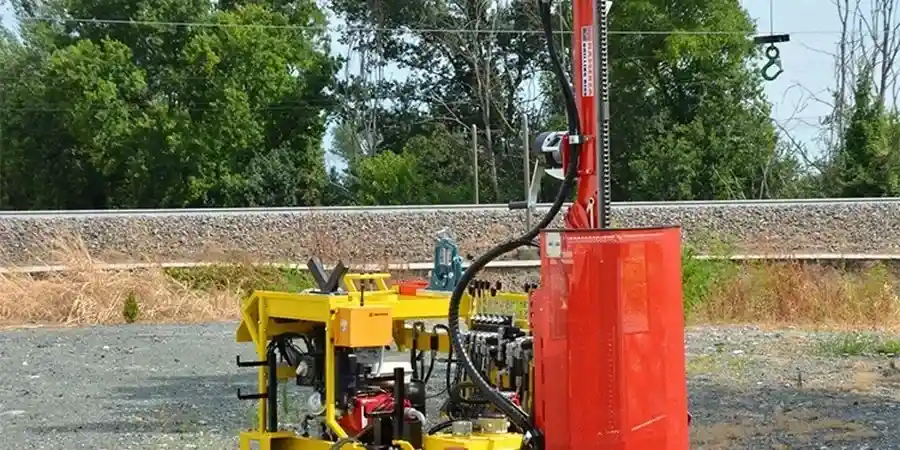
The rig we bring into Houston jobsites is typically a truck-mounted CME-75 with an automatic trip hammer calibrated to an energy ratio of 76% per ASTM D4633-16. The auto-hammer matters: safety-hammer rigs still roam the Gulf Coast, and their energy transfer can drift as low as 45%, which inflates blow counts and makes a loose sand look dense. At each 5-foot interval we drive a 2-inch OD split spoon with a 140-pound hammer dropping 30 inches, and we record the blows for each 6-inch penetration segment. The sum of the middle two segments gives you the field N-value. But Houston's subsurface—Pleistocene Beaumont clays with sand lenses and occasional oxidized zones—demands correction for overburden pressure, especially below 15 feet where the silt content jumps. We run grain-size curves on the spoon samples, and if the fines content crosses 35% we flag it for liquefaction screening per Idriss & Boulanger (2014) procedures, because the mapped Quaternary sands along Buffalo Bayou can trigger under a 2,500-year seismic event. The SPT also feeds directly into pile design for the drilled shafts common in the Energy Corridor, where skin friction in stiff clay is estimated from N60 correlations and verified against pressuremeter data.
SPT Testing in Houston: Geotechnical Data That Dictates Foundation Design
Technical reference — Houston

Local context

A mid-rise mixed-use project off Washington Avenue hit a 4-foot sand lens at 22 feet that no one caught because the SPT spoon was driven without liners and the driller rounded the blow counts to the nearest 5. The geotech modeled a uniform clay profile, recommended shallow footings, and six months after occupancy the slab settled 1.5 inches at the east corner, cracking the brick veneer and pulling the storefront glazing out of square. The repair involved compaction grouting at 40 kips per pile cap and cost the developer north of $300,000. In Houston's layered Pleistocene deposits—where sand, silt, and fat clay alternate within a single boring—the SPT log must record every 6-inch increment, and the lab needs to run a full grain-size suite on any sample that feels silty to the touch. When we suspect a loose saturated sand that could liquefy under a design earthquake, we push a CPT test immediately after the SPT to get a continuous pore pressure profile and a cyclic resistance ratio without sample disturbance. Skipping that step on a high-water-table site near the Addicks Reservoir is a gamble that structural engineers in this market have learned not to take.

Need a geotechnical assessment?

Reply within 24h.

Email: contact@geotechnicalengineering1.org

Reference standards


The city of Houston has adopted IBC 2018 Chapter 18 for soils and foundations, with local amendments. Standard penetration testing (SPT) and split-barrel sampling follow ASTM D1586-18, while dynamic penetrometer energy measurement adheres to ASTM D4633-16. For liquefaction analysis, the Idriss & Boulanger (2014) SPT-based triggering procedures are used. Minimum design loads are governed by ASCE 7-22.

Technical data

ParameterTypical value
Hammer typeAuto-trip, CME-75, calibrated to 76% energy ratio
Sampling intervalEvery 5 feet or at stratum change
Split spoon2-inch OD, 18-inch length, with liners
Blow count recordingThree 6-inch increments, N = sum of middle two
Corrections appliedN60, overburden (CN), rod length, borehole diameter
StandardASTM D1586-18, ASTM D4633-16
Typical max depth Houston30-60 ft for commercial, 20-30 ft for residential

Questions and answers


What does an SPT test cost for a residential lot in Houston?

For a single-family lot within Beltway 8 or toward Katy, a typical SPT program that includes one 25-foot boring and lab index tests costs between US$620 and US$790. The final price is influenced by accessibility—tight backyard rigs incur higher costs—and whether additional tests like Atterberg limits or unconfined compression on clay samples are required.

How many SPT borings does the City of Houston require for a commercial building?

Houston follows IBC 2018, which links the number of borings to building footprint. Structures exceeding 10,000 square feet require at least three borings distributed across the pad, with one reaching a depth of 30 feet or twice the foundation width. The Houston Public Works amendment mandates a boring log for every 2,500 square feet for irregular footprints. Permits are rejected if SPT data lacks N60 corrections and a 24-hour groundwater observation.

Can SPT detect the expansive Beaumont clays that cause foundation heave in Houston?

Swell potential cannot be determined from blow counts alone; however, the disturbed split-spoon sample allows Atterberg limits and percent-swell testing. When N-values range from 8 to 12 with a plasticity index over 25—frequently found in the upper 15 feet from Memorial to Sugar Land—the stratum is classified as highly expansive, and drilled piers socketed below the active zone are recommended.

How long does an SPT drilling program take in the Houston area?

A single 30-foot boring with SPT sampling every 5 feet takes roughly three to four hours of rig time, encompassing setup, drilling, sampling, and backfilling with bentonite grout. A commercial job with three borings can be finished in one long day, and the geotechnical report is typically ready within a week after completing lab tests on the recovered samples.

Do you hit groundwater during SPT borings in Houston, and how is it measured?

Groundwater in Houston seldom exceeds a depth of 20 feet, and near bayous it can be as shallow as 8 feet. During the SPT boring, the water strike depth is recorded while drilling, and after 24 hours the stabilized level is measured through the open borehole before grouting. This reading is critical for liquefaction analysis and for designing temporary dewatering systems for excavations deeper than a basement.

Location and service area

We serve projects across Houston and surrounding areas.

View larger map